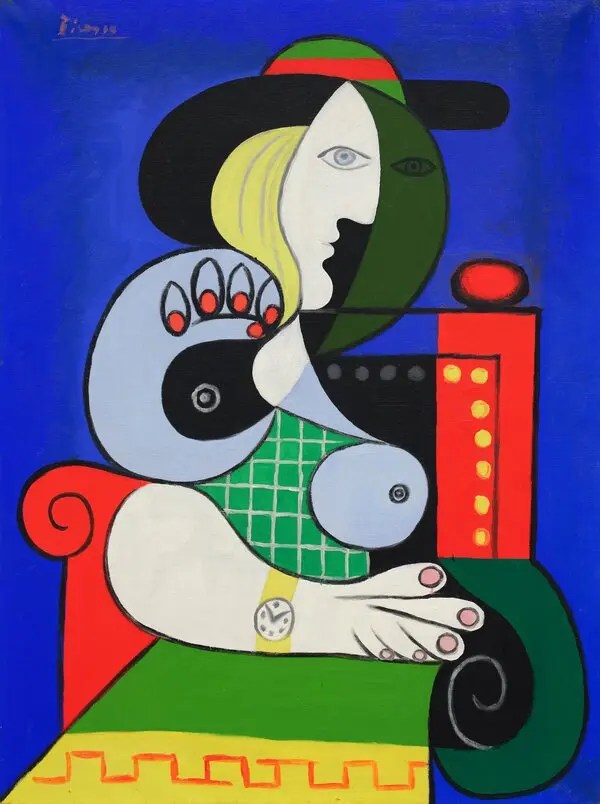
Though arguably Sotheby’s (with a record-breaking Picasso sale), and Christie’s had a good year – despite a reduction of overall sales – 2023 could have been better for auction guarantees. An emerging trend of 2023’s art market was the elastic dynamics of auction guarantees, which shrunk last year. Investors and collectors play a crucial role in providing financial assurances to auction houses by guaranteeing minimum sale prices for certain artworks. An increasing number of investors are opting for a more cautious approach. This resulted in fewer guarantees extended to artworks at auction last year than previously. A longer term shift?
One significant contributing factor is the increased uncertainty in the global economic landscape. The art market is closely tied to economic conditions. Like the rest of the world, the art market witnessed fluctuations and uncertainties, making investors more risk averse. Economic challenges, geopolitical tensions, and the lingering effects of (long?) COVID have colluded to create an atmosphere of caution. Subsequently, with a few bright spots – such as notable sale prices at Sotheby’s for Picasso and Klimt, and the 20th Century sales at Christie’s – overall 2023 investors seemed to re-evaluate their risk exposure in the art market.
Adding to the tension, the nature of guarantees itself has come under scrutiny. Guarantees can provide stability and confidence to both sellers and auction houses. They also come with inherent risks. If a guaranteed artwork fails to meet its reserve price at auction, the guarantor is obligated to purchase the piece at the guaranteed price. This financial commitment can be significant, and in an unpredictable market, investors seem increasingly wary of assuming such obligations.
Additionally, global regulatory changes and increased scrutiny on the art market may also be influencing investor behavior. As a number of governments around the world intensify efforts to enhance financial transparency, art transactions are facing closer examination. Guarantees can sometimes be perceived as tools that obscure the true value and ownership of artworks, making individual investors cautious about participating in such arrangements.
In this changing landscape, auction houses are also adapting their strategies. Some are exploring alternative financial models, such as shared-risk agreements. Others are focusing on building stronger relationships with collectors and sellers, emphasizing the value of the auction process itself.
In conclusion, the decline in the number of investors guaranteeing art at auction in 2023 can be attributed to a number of factors. Economic uncertainty, rising global tensions, evolving market preferences, and a reassessment of the risks associated with guarantees are unlikely to change in early 2024. But as the art market continues to evolve, we are likely to witness innovations in financial models and auction strategies to navigate the challenges and capitalize on emerging opportunities.
Will 2024 generate more syndicated financial arrangements, spreading the risk? Or are we experiencing a longer-term market shift in sentiment with investors reassessing the value and relevance of guarantees in the contemporary art market that will not settle until global tensions are reduced?
 æsthetic triangle