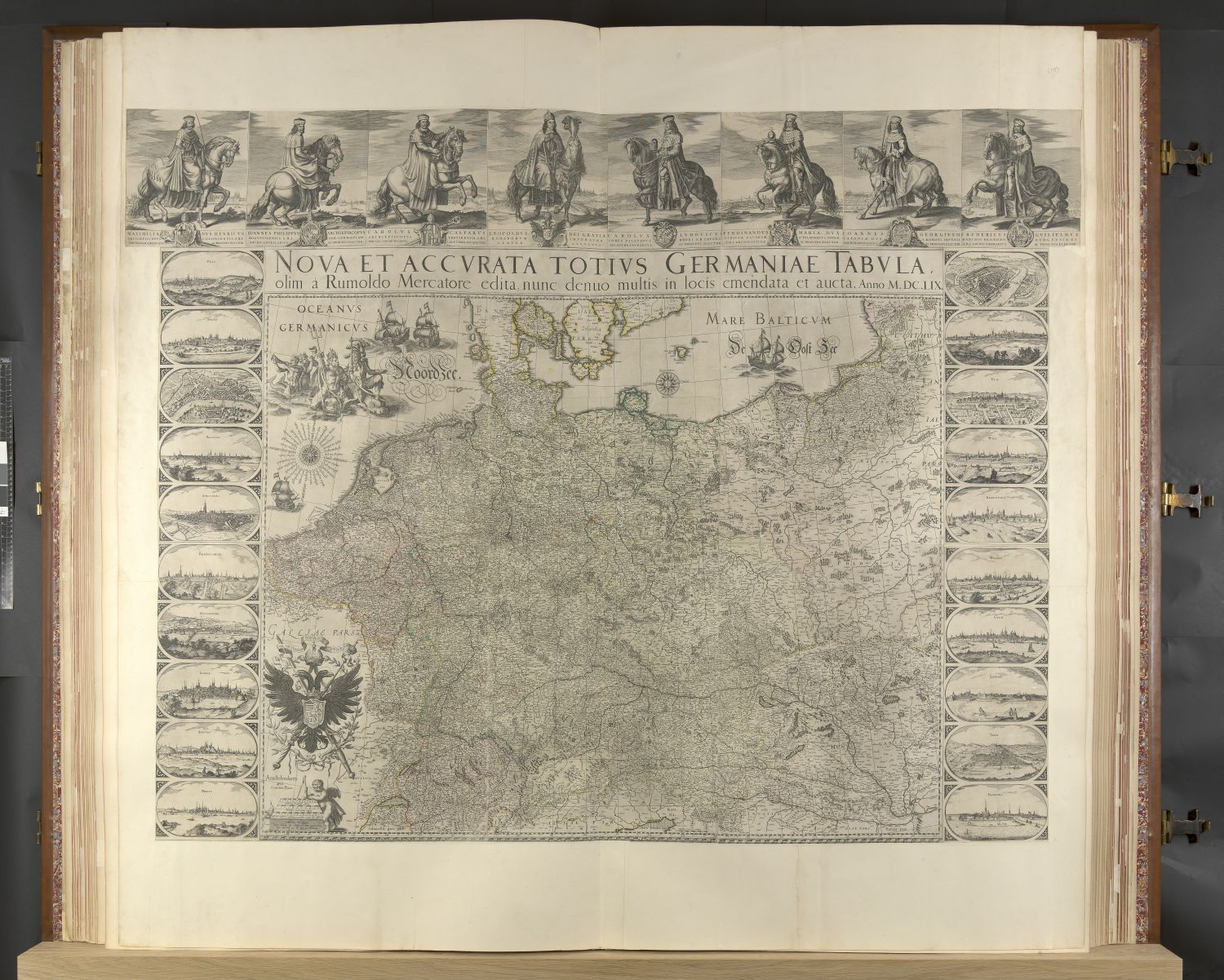
The Klencke Atlas stands as a testament to the grandeur and diplomacy of the 17th century. Commissioned as a gift to King Charles II of England in 1660, this monumental atlas is not only one of the largest books ever produced but also a symbol of the close relationship between the Dutch Republic and the newly restored English monarchy.
Measuring an impressive 1.76 meters in height and weighing over 150 kilograms, the Klencke Atlas is an imposing tome that contains a rich collection of maps and charts from around the world. It covers a wide range of geographical regions, including Europe, Asia, Africa, and the Americas, reflecting the global reach of Dutch cartography and exploration during the Golden Age of the Dutch Republic.
One of the most remarkable features of the Klencke Atlas is its exquisite craftsmanship. Bound in luxurious red Moroccan leather and adorned with intricate gold tooling, it is a masterpiece of bookbinding that reflects the opulence and sophistication of the era.
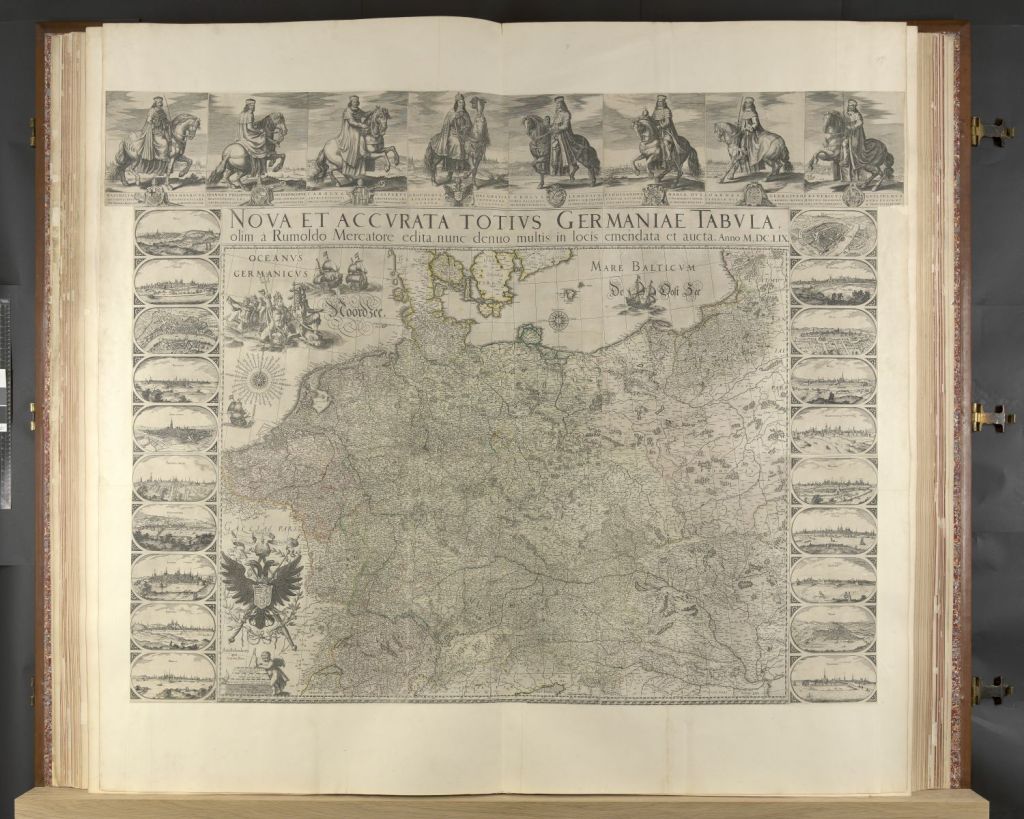
Moreover, the Klencke Atlas serves as a symbol of diplomatic relations between the Dutch Republic and England. Commissioned by a group of wealthy Dutch merchants and presented to King Charles II upon his restoration to the throne, it was intended to foster goodwill and strengthen ties between the two nations.
As we admire the Klencke Atlas today, we are reminded of the power of cartography to unite cultures and forge connections across borders. It serves as a reminder of the enduring legacy of exploration and discovery, as well as the importance of diplomacy in shaping the course of history.
#KlenckeAtlas #Cartography #DutchRepublic #MonumentalGift #CharlesII
 æsthetic triangle