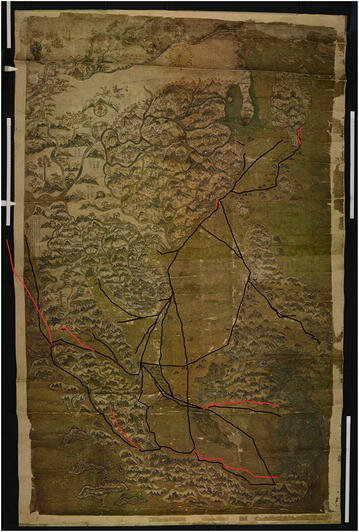
In the realm of historical cartography, the Selden Map of Korea stands as a testament to the rich tapestry of maritime trade routes that crisscrossed the seas of East Asia during the late Joseon Dynasty. Crafted in the early 17th century, this remarkable map offers a unique perspective on the regional maritime trade network, illuminating the economic, cultural, and geopolitical dynamics of East Asia during this period. Through its intricate details and strategic depictions, the Selden Map invites us to embark on a journey of exploration and discovery, tracing the interconnected web of trade routes that connected Korea to the wider world.
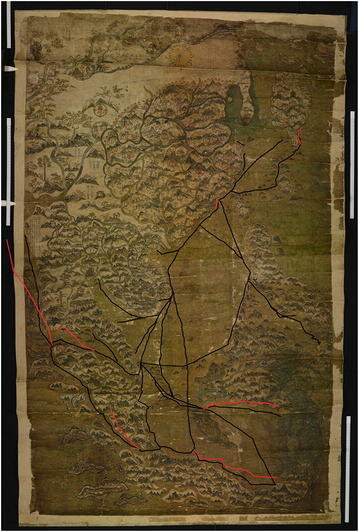
Commissioned by the English jurist John Selden in the early 17th century, the Selden Map of Korea is a testament to the growing interest in East Asia and its lucrative trade opportunities among European merchants and diplomats. Crafted by Korean cartographers, the map offers a comprehensive overview of the maritime trade routes, ports, and navigational hazards that characterized the seas of East Asia during the late Joseon Dynasty. Measuring approximately 1.6 meters in length, the map is painted on silk and adorned with colorful illustrations, inscriptions, and annotations that reflect the cartographic knowledge and artistic traditions of the time.
At the heart of the Selden Map lies the Korean peninsula, depicted with meticulous detail and precision. From the bustling port cities of Busan and Incheon to the rugged coastlines and islands that dot the Korean coast, the map offers a vivid portrayal of Korea’s maritime geography and strategic importance in the regional trade network. Surrounding Korea are various regions and kingdoms of East Asia, each represented by distinctive symbols and annotations that highlight their economic significance and cultural connections to Korea.
One of the most striking features of the Selden Map is its depiction of maritime trade routes that connected Korea to neighboring regions and beyond. From the bustling port of Nagasaki in Japan to the spice islands of Southeast Asia, the map traces the routes of merchant ships and trade convoys that plied the waters of the East China Sea and the Yellow Sea. Along these routes are depicted various commodities such as textiles, ceramics, and precious metals, each symbolizing the flow of goods and wealth that fueled the region’s economy and shaped its cultural landscape.
The Selden Map also offers insights into the cultural exchanges and geopolitical dynamics of East Asia during the late Joseon Dynasty. By depicting Korea’s maritime domain in relation to neighboring regions and kingdoms, the map reflects Korea’s role as a hub of maritime commerce and cultural exchange, as well as its efforts to assert its sovereignty and safeguard its maritime interests against foreign incursions. At the same time, the map also highlights Korea’s engagement with the wider world and its willingness to embrace foreign trade and exchange—a testament to the cosmopolitan outlook and economic pragmatism of the Joseon Dynasty rulers.
Today, the Selden Map of Korea continues to captivate scholars and enthusiasts alike with its beauty, complexity, and historical significance. Through its intricate details and strategic depictions, the map offers a window into the vibrant maritime commerce and cultural exchanges of the late Joseon Dynasty era. As we trace the maritime trade routes depicted on the Selden Map, we gain a deeper appreciation for the interconnectedness of civilizations and the enduring legacy of maritime commerce in shaping the history and culture of East Asia and beyond.
I hope you also see that the Selden Map of Korea is a remarkable testament to the rich tapestry of maritime trade routes that connected Korea to the wider world during the late Joseon Dynasty. Through its intricate details and strategic depictions, the map offers valuable insights into the economic, cultural, and geopolitical dynamics of East Asia during this period, highlighting Korea’s role as a hub of maritime commerce and cultural exchange. As we explore the Selden Map, we gain a deeper appreciation for the interconnectedness of civilizations and the enduring legacy of maritime trade in shaping the history and culture of East Asia and beyond.
#EastAsianTrade #KoreanHistory #MaritimeCommerce #SeldenMap #Cartography
 æsthetic triangle