
Few artifacts carry the intrigue and mystery of the Vinland Map – and reasonably so. Discovered in the mid-20th century amidst the pages of a medieval manuscript, this enigmatic map purportedly depicts the coastlines of North America, offering tantalizing evidence of Norse exploration in the New World centuries before the voyages of Christopher Columbus. Yet, the Vinland Map’s authenticity remains a subject of debate among scholars, stirring controversy and fascination as researchers continue to unravel the mysteries of its origins and significance.
The Vinland Map first captured the world’s attention in the 1960s when it emerged from the archives of Yale University as part of a bound volume of medieval texts. Believed to date from the early 15th century, the map depicts a portion of the North Atlantic Ocean, with labeled landmasses corresponding to Greenland, Iceland, and the fabled Vinland—a region believed to represent parts of modern-day Newfoundland and the Canadian Maritimes. If authentic, the map would provide compelling evidence of Norse exploration in North America around the year 1000 AD, predating Columbus’s voyages by nearly five centuries.
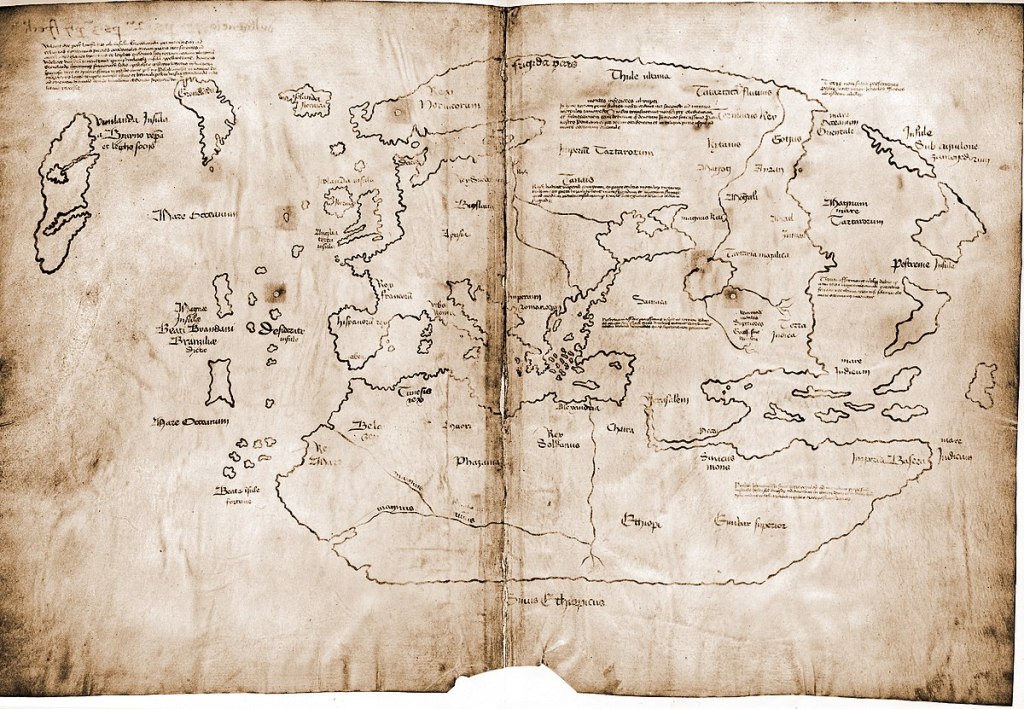
What sets the Vinland Map apart is its purported connection to the Vinland Sagas—a pair of medieval Norse texts that describe voyages to North America led by the Norse explorer Leif Erikson and his followers. According to these sagas, Leif and his crew established a settlement in Vinland around the year 1000 AD, marking the earliest known European presence in the New World. The Vinland Map, with its depiction of a landmass labeled “Vinilanda Insula,” appeared to corroborate these accounts, sparking excitement and controversy among historians and cartographers alike.
However, the Vinland Map’s authenticity has been called into question by skeptics who point to inconsistencies in its provenance and scientific analysis. Radiocarbon dating of the parchment suggests a date of origin in the 15th century, raising doubts about its connection to the Vinland Sagas and the Norse exploration of North America. Additionally, chemical analysis of the ink used on the map has revealed modern additives not consistent with medieval materials, further clouding its authenticity and fueling skepticism among scholars.
Despite these challenges, proponents of the Vinland Map argue that its depiction of Vinland and other geographical features aligns closely with medieval Norse cartography and geographical knowledge. They contend that while the map itself may be a later copy or forgery, its underlying depiction of Vinland may still reflect genuine Norse exploration and knowledge of the New World. Indeed, archaeological evidence unearthed in Newfoundland and elsewhere supports the notion of Norse presence in North America, lending credence to the possibility that the Vinland Map may contain kernels of historical truth amidst the layers of mystery and speculation.
Beyond its authenticity, the Vinland Map serves as a symbol of the enduring allure of exploration and discovery. Whether genuine artifact or elaborate forgery, the map has captured the imaginations of scholars, adventurers, and enthusiasts alike, inspiring countless expeditions and investigations into the mysteries of Norse exploration and medieval cartography. As researchers continue to unravel the enigma of the Vinland Map, they shed light not only on the history of exploration but also on the enduring human quest for knowledge and understanding of the world around us.
A tantalizing enigma, the Vinland Map is a testament to the enduring fascination with Norse exploration and the mysteries of the New World. Whether authentic artifact or elaborate forgery, the map serves as a symbol of human curiosity and the quest for knowledge, inspiring generations of scholars and adventurers to unravel the mysteries of the past and explore the unknown realms of history and geography. As the debate over its authenticity continues, the Vinland Map stands as a reminder of the enduring allure of exploration and the enduring quest to uncover the secrets of the past.
#VinlandMap #Vikings #Exploration #History #Geography
 æsthetic triangle