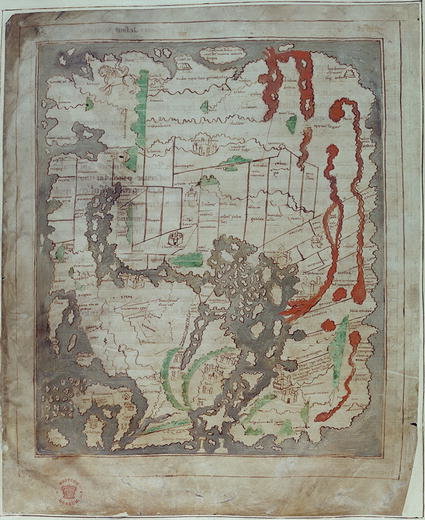
In the tapestry of Tudor England’s ambitions and endeavors, few artifacts resonate as profoundly as the Cotton Map. Crafted during the 16th century, this exquisite cartographic masterpiece offers a glimpse into an era defined by exploration, conquest, and the relentless pursuit of imperial glory. Commissioned by Sir Robert Cotton, an influential antiquarian and collector, the map serves as a testament to England’s aspirations to chart new territories and establish its presence on the global stage. Through its intricate details and strategic symbolism, the Cotton Map reveals the geopolitical ambitions and maritime exploits that shaped the course of English history.
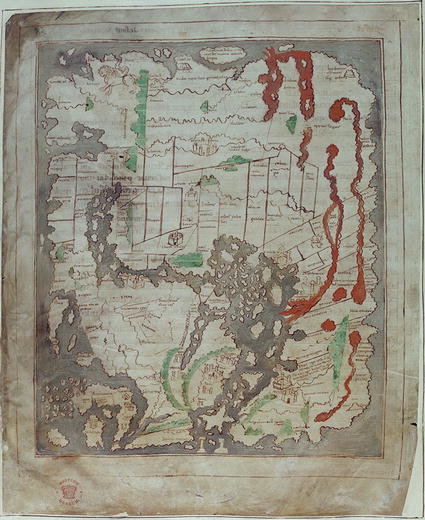
Created in 1570 by the English cartographer Humphrey Llwyd, the Cotton Map is a striking representation of the known world at the dawn of the Elizabethan Age. Measuring over six feet in length, the map encompasses Europe, Africa, Asia, and the Americas, charting the contours of distant lands and exotic locales with remarkable precision. Its detailed depictions of coastlines, rivers, and mountain ranges reflect the burgeoning interest in geography and exploration that characterized the Renaissance era.
At the heart of the Cotton Map lies England’s imperial ambitions and aspirations to rival the maritime powers of Europe. In an age dominated by Spanish and Portuguese exploration, England sought to carve out its own place in the global arena, harnessing the spirit of adventure and enterprise that fueled the Age of Discovery. Through its portrayal of newly discovered territories and navigational routes, the map asserts England’s claim to a share of the riches and resources of the New World—a bold declaration of intent that would shape the course of English colonial expansion for centuries to come.
One of the most striking features of the Cotton Map is its depiction of the Americas, which were still largely unexplored and shrouded in mystery at the time of its creation. Drawing upon the accounts of explorers such as John Cabot and Sir Walter Raleigh, the map offers tantalizing glimpses of the fabled lands of the New World, including the mythical city of El Dorado and the legendary Northwest Passage. Through its vivid imagery and evocative symbolism, the map captures the imagination of viewers and invites them to embark on a virtual journey of exploration and discovery.
Yet, for all its geographical accuracy and artistic beauty, the Cotton Map also serves as a reflection of England’s political and military ambitions. In the wake of the Protestant Reformation and the English Reformation, England sought to assert its independence from the Catholic powers of Europe and establish itself as a dominant force in the geopolitics of the era. Through its depictions of fortified cities, naval engagements, and territorial conquests, the map conveys England’s determination to defend its interests and expand its influence on the world stage.
The legacy of the Cotton Map extends far beyond the confines of its parchment surface. As a symbol of Tudor England’s imperial ambitions, it continues to inspire scholars, historians, and enthusiasts alike, offering a window into the dynamic and tumultuous world of the Elizabethan Age. Through its intricate details and strategic symbolism, the map sheds light on the geopolitical aspirations and maritime exploits that shaped the course of English history and left an indelible mark on the global landscape.
This Elizabethan Age map stands as a testament to Tudor England’s ambitions and aspirations to chart new territories and establish its presence on the global stage. Through its exquisite craftsmanship and strategic symbolism, it captures the essence of an era defined by exploration, conquest, and the relentless pursuit of imperial glory. As we unravel the tapestry of Tudor England’s ambitions, let us also reflect on the enduring legacy of the explorers and navigators who dared to venture into the unknown, forever changing the course of history and shaping the destiny of nations.
#CottonMap #TudorExploration #Cartography #History #Exploration
 æsthetic triangle