In the annals of cartographic history, the Cantino Planisphere stands as a monumental testament to the Age of Discovery—a period of unprecedented maritime exploration and global expansion that reshaped the course of human history. Crafted in the early 16th century, this exquisite map embodies the spirit of adventure, curiosity, and ambition that propelled European explorers across uncharted seas in search of new worlds and untold riches. With its intricate details and vivid depictions of distant lands and exotic peoples, the Cantino Planisphere offers a captivating glimpse into an era of exploration and discovery that forever altered the map of the world.
Commissioned by Alberto Cantino, an Italian diplomat serving in Lisbon, Portugal, the Cantino Planisphere is one of the earliest surviving maps to depict the newly discovered lands of the Americas. Created around 1502 by an unknown Portuguese cartographer, the map is believed to be based on the navigational charts and exploratory voyages of Portuguese explorers such as Bartolomeu Dias and Vasco da Gama. Its primary purpose was to serve as a tool for navigation and exploration, providing sailors with vital information about the newly discovered territories and the maritime routes that connected them to the Old World.
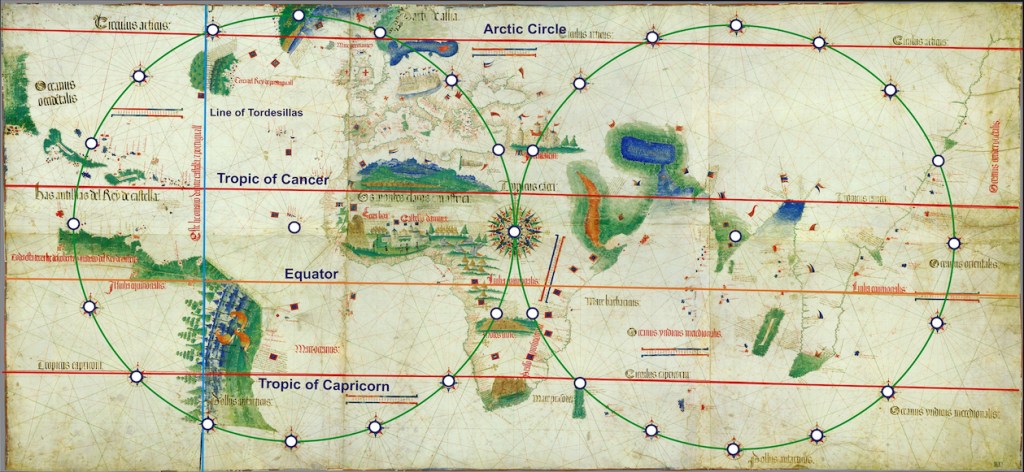
What sets the Cantino Planisphere apart is its remarkable accuracy and attention to detail, especially considering the limited geographical knowledge available to European cartographers at the time. From the coastlines of Africa and Europe to the islands of the Caribbean and the shores of Brazil, the map meticulously charts the contours of the known world with astonishing precision. Its depiction of the Americas, in particular, is a testament to the groundbreaking discoveries made by Christopher Columbus and other explorers who ventured into the unknown in search of a westward passage to the riches of the East.
Equally remarkable are the map’s depictions of indigenous peoples and cultures, which offer tantalizing glimpses into the diversity and complexity of the newly encountered lands. From the feathered headdresses of Native Americans to the regal attire of African dignitaries, the Cantino Planisphere captures the richness and diversity of the human experience, inviting viewers to contemplate the wonders of a world in flux. Through its vivid imagery and evocative symbolism, the map serves as a bridge between different cultures and civilizations, illuminating the interconnectedness of the world and the shared aspirations of humanity.
Yet, for all its geographical accuracy and artistic beauty, the Cantino Planisphere also reflects the political and economic ambitions of its time. Commissioned by Alberto Cantino on behalf of the Duke of Ferrara, the map was intended to provide valuable intelligence about the newly discovered territories and their potential for colonization and exploitation. Its detailed depictions of coastlines, harbors, and navigational routes were invaluable assets to European powers vying for control of lucrative trade routes and overseas territories in the age of mercantilism.
The legacy of the Cantino Planisphere extends far beyond the confines of its parchment surface. As a symbol of the Age of Discovery, it continues to inspire scholars, explorers, and historians alike, offering a window into the world of the Renaissance and the transformative impact of maritime exploration on global history. Through its intricate details and evocative imagery, the map invites viewers to embark on a virtual journey of exploration and discovery, retracing the footsteps of intrepid adventurers who dared to chart the unknown and challenge the boundaries of the known world.
This map is a timeless masterpiece of cartography—a testament to the spirit of adventure, curiosity, and ambition that fueled the Age of Discovery. Through its exquisite craftsmanship and geographical precision, it captures the essence of an era marked by exploration, innovation, and cultural exchange. As we marvel at its beauty and complexity, let us also reflect on the enduring legacy of the explorers and navigators who dared to venture into the unknown, forever changing the course of human history and expanding the horizons of our collective imagination.
#CantinoPlanisphere #PortugueseExploration #History #MaritimeTrade
 æsthetic triangle