
In the annals of cartographic history, few artifacts stand as emblematic of human curiosity and ingenuity as the Fra Mauro Map. Crafted in the 15th century by the Venetian monk Fra Mauro, this masterpiece of cartography remains a testament to the Renaissance spirit of exploration, knowledge, and meticulous craftsmanship. Through its intricate details and artistic beauty, the map not only delineates geographical landscapes but also captures the essence of an era marked by burgeoning intellectual inquiry and cultural exchange.
Commissioned by King Afonso V of Portugal in the early 1450s, the Fra Mauro Map was intended to serve as a comprehensive representation of the known world at the time. Fra Mauro, a skilled cartographer and cosmographer, embarked on a painstaking endeavor that would consume years of his life. Drawing upon a wide array of sources including travelogues, navigational charts, and geographic treatises, he meticulously pieced together a cartographic marvel that fused empirical observations with artistic flair.
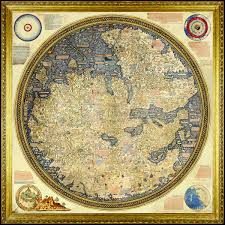
What sets the Fra Mauro Map apart is its remarkable synthesis of accuracy and imagination. While grounded in empirical data and firsthand accounts of explorers, it also incorporates elements of medieval cosmology and religious symbolism. The map depicts continents, oceans, and distant lands with remarkable precision, yet it also weaves in mythical creatures, biblical scenes, and exotic locales that reflect the worldview of its creator and the cultural milieu of his time.
One of the most striking features of the Fra Mauro Map is its portrayal of the Indian Ocean, which served as a vital maritime thoroughfare linking Europe, Africa, and Asia. Fra Mauro’s meticulous rendering of coastlines, islands, and trade routes attests to the growing interconnectedness of the known world and the burgeoning age of maritime exploration. Through his cartographic lens, he sought to capture the dynamism and diversity of the maritime world, charting the paths of sailors, merchants, and adventurers who ventured into uncharted waters in search of wealth, knowledge, and adventure.
Equally fascinating are the map’s depictions of distant lands and peoples, which blend factual observation with imaginative interpretation. From the towering peaks of the Himalayas to the fabled riches of the East, Fra Mauro’s map teems with exoticism and wonder, inviting viewers to embark on a virtual journey of exploration and discovery. Yet, amidst the allure of distant lands and exotic cultures, there also lies a subtle message about the unity of humanity and the interconnectedness of all peoples—a timeless theme that resonates across the centuries.
Beyond its aesthetic appeal and historical significance, the Fra Mauro Map also offers valuable insights into the mindset of Renaissance Europe—a world in flux, where old certainties were giving way to new horizons of thought and discovery. At a time when Europe was emerging from the shadows of the Middle Ages and embarking on an era of unprecedented exploration and innovation, Fra Mauro’s map served as a visual manifesto of humanity’s quest for knowledge and understanding.
The legacy of the Fra Mauro Map extends far beyond the confines of its parchment surface. As a testament to human ingenuity and curiosity, it continues to inspire scholars, explorers, and artists alike, reminding us of the enduring power of maps to illuminate our understanding of the world and ourselves. In an age of GPS and satellite imagery, the Fra Mauro Map stands as a timeless reminder of the artistry and craftsmanship that once defined the noble pursuit of cartography—a testament to the enduring allure of maps as windows onto the world and the human imagination.
In conclusion, the Fra Mauro Map remains a Renaissance masterpiece of cartography—a testament to the enduring power of human curiosity, ingenuity, and imagination. Through its intricate details and artistic beauty, it offers a captivating glimpse into the spirit of exploration and discovery that characterized an era of profound change and transformation. As we marvel at its beauty and complexity, let us also pause to reflect on the timeless lessons it imparts about the unity of humanity and the boundless possibilities of the human mind.
#FraMauroMap #RenaissanceCartography #Exploration #Renaissance #History
 æsthetic triangle