
The Industrial Revolution, a period of profound social and economic change in the 18th and 19th centuries, had a significant impact on the artistic landscape. Artists responded to the challenges and transformations brought about by industrialization in various ways, reflecting both the opportunities and the darker aspects of this era.
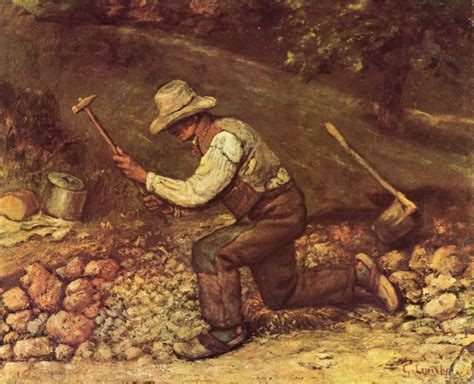
- Realism and Social Commentary: Artists like Gustave Courbet in France and the Pre-Raphaelite Brotherhood in England sought to depict the reality of industrial life. Courbet’s “The Stone Breakers” and the Pre-Raphaelite’s paintings like Ford Madox Brown’s “Work” critiqued the harsh working conditions and social inequalities arising from industrialization.
- Impressionism: The Impressionist movement emerged as a reaction against the industrialized urban environment. Artists like Claude Monet and Pierre-Auguste Renoir focused on capturing fleeting moments of nature and everyday life, providing a contrast to the mechanized and structured aspects of industrial society.
- Symbolism: Symbolist artists, such as Odilon Redon and Gustav Klimt, responded to the spiritual and psychological implications of industrialization. They often incorporated symbolic and dreamlike elements in their works, exploring the tension between the material and the spiritual realms.
- Arts and Crafts Movement: Led by figures like William Morris, the Arts and Crafts Movement sought to counter the dehumanizing effects of mass production by promoting craftsmanship and traditional artisanal skills. This movement emphasized the value of handmade, aesthetically pleasing objects.
- Futurism: In the early 20th century, the Futurist movement in Italy embraced the dynamism and speed of modern technology. Artists like Umberto Boccioni and Giacomo Balla celebrated the industrial age, depicting movement, energy, and the mechanization of society.

These artistic responses to the Industrial Revolution reflected a complex and multifaceted engagement with the profound changes occurring in society. While some artists critiqued the social injustices and environmental degradation, others embraced the technological advancements and sought new ways to express the modern experience. The diverse approaches of artists during this period reflect the complexity and ambivalence of the industrial age.
 æsthetic triangle