
The evolution of still life painting spans centuries, from the detailed realism of Dutch masters in the 17th century to the diverse and experimental approaches of contemporary artists. Still life, often featuring inanimate objects arranged in a composition, has been a genre that allowed artists to explore themes of symbolism, beauty, and the transience of life.
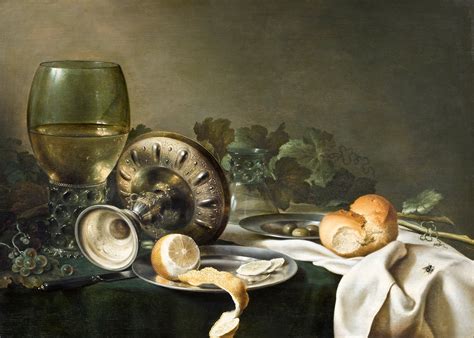
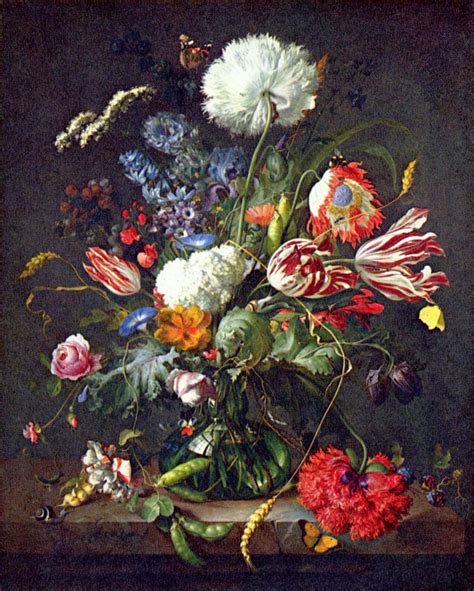
During the Dutch Golden Age in the 17th century, artists like Willem Claeszoon Heda and Jan Davidsz. de Heem excelled in the meticulous rendering of everyday objects. Their still lifes, often referred to as vanitas paintings, conveyed a moralizing message about the impermanence of life and the futility of material wealth. Rich symbolism, such as skulls, hourglasses, and wilting flowers, became common elements in these compositions.
In the 18th century, the Rococo period brought a more ornate and decorative style to still life painting. Jean-Baptiste-Siméon Chardin, a French artist, infused his works with a sense of intimacy and domesticity, focusing on the beauty of simple objects like fruit, utensils, and game.
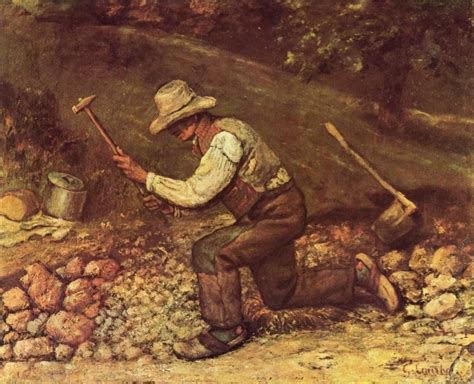
The 19th century saw a shift towards Romanticism and Realism. Artists like Édouard Manet and Gustave Courbet explored still life in the context of broader artistic movements. Manet’s “Luncheon in the Studio” and Courbet’s “The Stone Breakers” reflect a departure from traditional still life conventions, incorporating narrative elements and social commentary.
The 20th century witnessed a radical departure from realism with the advent of modern art movements. Cubist artists, such as Pablo Picasso and Juan Gris, deconstructed objects and reshaped reality in their still life compositions. Picasso’s “Violin and Candlestick” exemplifies the fragmented and multi-perspective approach of Cubism.
Surrealist artists, like Salvador Dalí, brought a dreamlike and subconscious quality to still life. Dalí’s “The Persistence of Memory,” while not a traditional still life, features surreal, melting watches in a desert landscape, challenging conventional perceptions of time and reality.
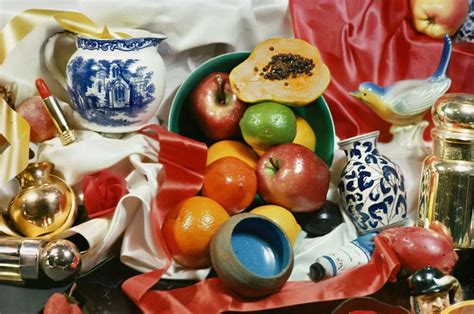
Contemporary still life artists have embraced a wide range of styles and mediums. The hyperrealistic paintings of Audrey Flack, the conceptual installations of Damien Hirst, and the vibrant compositions of Yayoi Kusama showcase the diversity of approaches within the genre. Modern still life has expanded beyond traditional oil paintings to include photography, sculpture, and mixed media.
The evolution of still life painting reflects not only changes in artistic techniques but also shifts in cultural, philosophical, and technological contexts. From the moralistic symbolism of the Dutch masters to the experimental and boundary-pushing works of contemporary artists, still life continues to be a dynamic and evolving genre that captures the essence of each artistic era.
 æsthetic triangle