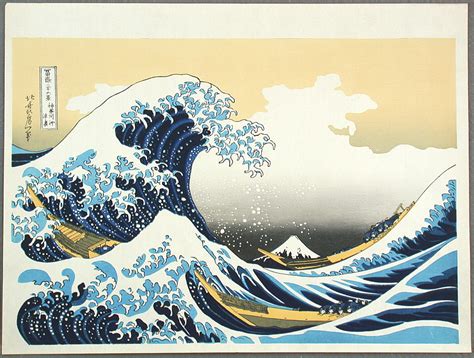
Japanese woodblock prints, known as ukiyo-e, reached the zenith of their popularity during the Edo period (1603–1868). Ukiyo-e, translating to “pictures of the floating world,” emerged as a distinctive and influential art form that captured the vibrant urban culture, landscapes, and theater of Edo (modern-day Tokyo).

Artists like Hokusai, Hiroshige, and Utamaro created masterpieces that showcased the technical skill of woodblock printing and depicted scenes from everyday life, kabuki theater, landscapes, and beautiful women. The intricate process involved multiple artisans—designers, carvers, and printers—working collaboratively to produce each print.
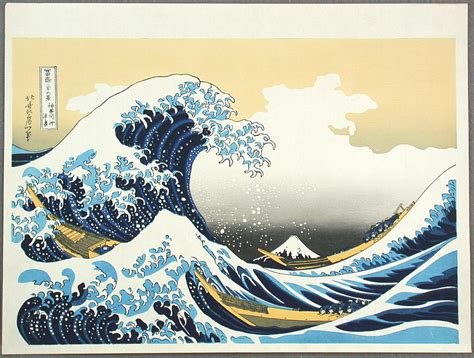
Hokusai’s “Thirty-Six Views of Mount Fuji” series is an iconic example of ukiyo-e. The print “The Great Wave off Kanagawa” depicts a towering wave about to engulf small boats with Mount Fuji in the background. The composition, dynamic lines, and use of color exemplify the visual impact and storytelling capabilities of ukiyo-e.
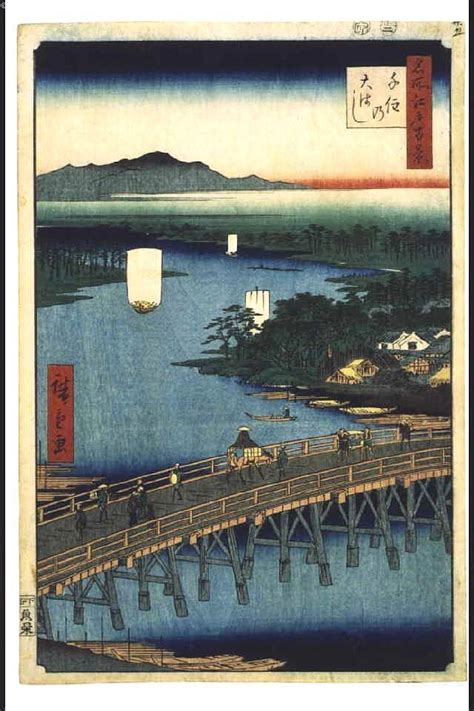
Hiroshige’s “One Hundred Famous Views of Edo” is another celebrated series, showcasing the beauty of Edo through changing seasons and various vantage points. Prints like “The Plum Garden in Kameido” convey a serene atmosphere, demonstrating Hiroshige’s mastery of atmospheric perspective and composition.
Utamaro, known for his bijinga (pictures of beautiful women), created elegant and refined portraits of courtesans and women engaged in daily activities. His prints, like “Three Beauties of the Present Day,” emphasized the delicate features and graceful poses of women, reflecting the cultural ideals of beauty during the Edo period.

Ukiyo-e prints also played a crucial role in disseminating kabuki theater and actor portraits to a broad audience. Artists like Sharaku depicted actors in dramatic and expressive poses, capturing the essence of their performances. Sharaku’s prints, such as “Otani Oniji III as Edobei,” are characterized by bold lines and intense expressions, conveying the theatricality of kabuki.
The popularity of ukiyo-e extended beyond Japan, influencing European artists like Vincent van Gogh and Claude Monet. Van Gogh, in particular, admired the vivid colors and compositions of Japanese prints, incorporating their influence into his own works.
Despite facing challenges during the Meiji period and the decline of traditional woodblock printmaking, ukiyo-e remains an enduring legacy, appreciated for its artistic excellence and cultural significance. Today, these Edo period masterpieces continue to captivate art enthusiasts worldwide, preserving the essence of a dynamic and vibrant era in Japanese history.
 æsthetic triangle