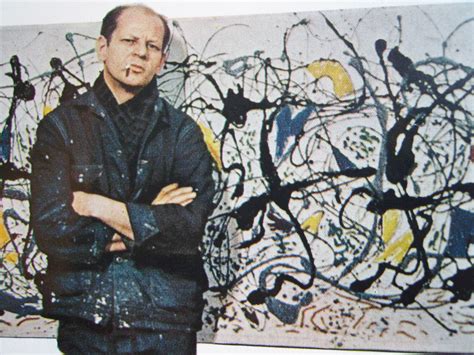
Jackson Pollock (1912-1956) was a pioneering American abstract expressionist painter, renowned for his unique and revolutionary drip painting technique. Born in Cody, Wyoming, Pollock’s artistic journey took him from regional landscapes to the forefront of the international art scene.
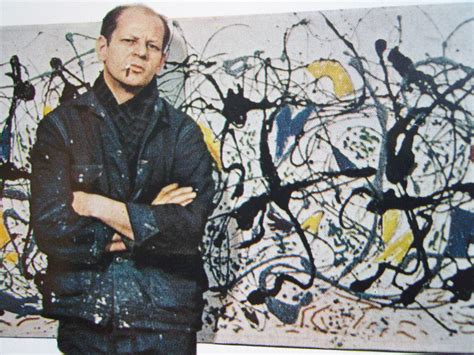
Pollock’s most distinctive contribution to the art world was his unconventional method of pouring and dripping paint onto canvases laid on the floor. It might now seem like such a tremendous innovation today but at the time it was extraordinary.
This groundbreaking approach eliminated the traditional easel, allowing him to move around the canvas and engage with it from all angles. The result was a dynamic and chaotic composition that captured the spontaneity of his gestures and the energy of the process.
One of his most famous works, “Number 1A, 1948,” exemplifies (see below), his drip technique, featuring intricate webs of paint that seem to dance across the canvas. His style, often referred to as “action painting,” emphasized the physical act of creation, with the canvas becoming a record of the artist’s movements and emotions.
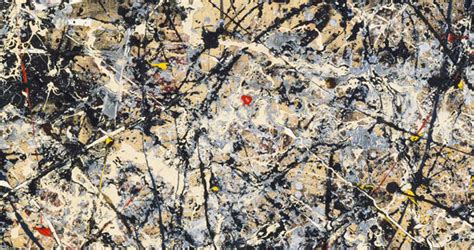
Pollock’s art was a departure from representational forms, pushing the boundaries of abstraction and challenging traditional notions of composition. His work had a profound impact on the abstract expressionist movement, influencing artists like Willem de Kooning and Franz Kline.
Despite his influential role in the art world, Pollock faced personal challenges, including struggles with alcoholism and mental health issues. Tragically, he died in a car accident at the age of 44, cutting short a career that had already left an indelible mark on the history of modern art.
Jackson Pollock’s legacy endures as a symbol of artistic innovation and the power of pushing boundaries. His dynamic and expressive works continue to captivate and inspire audiences, inviting them to explore the limitless possibilities of artistic expression.
 æsthetic triangle