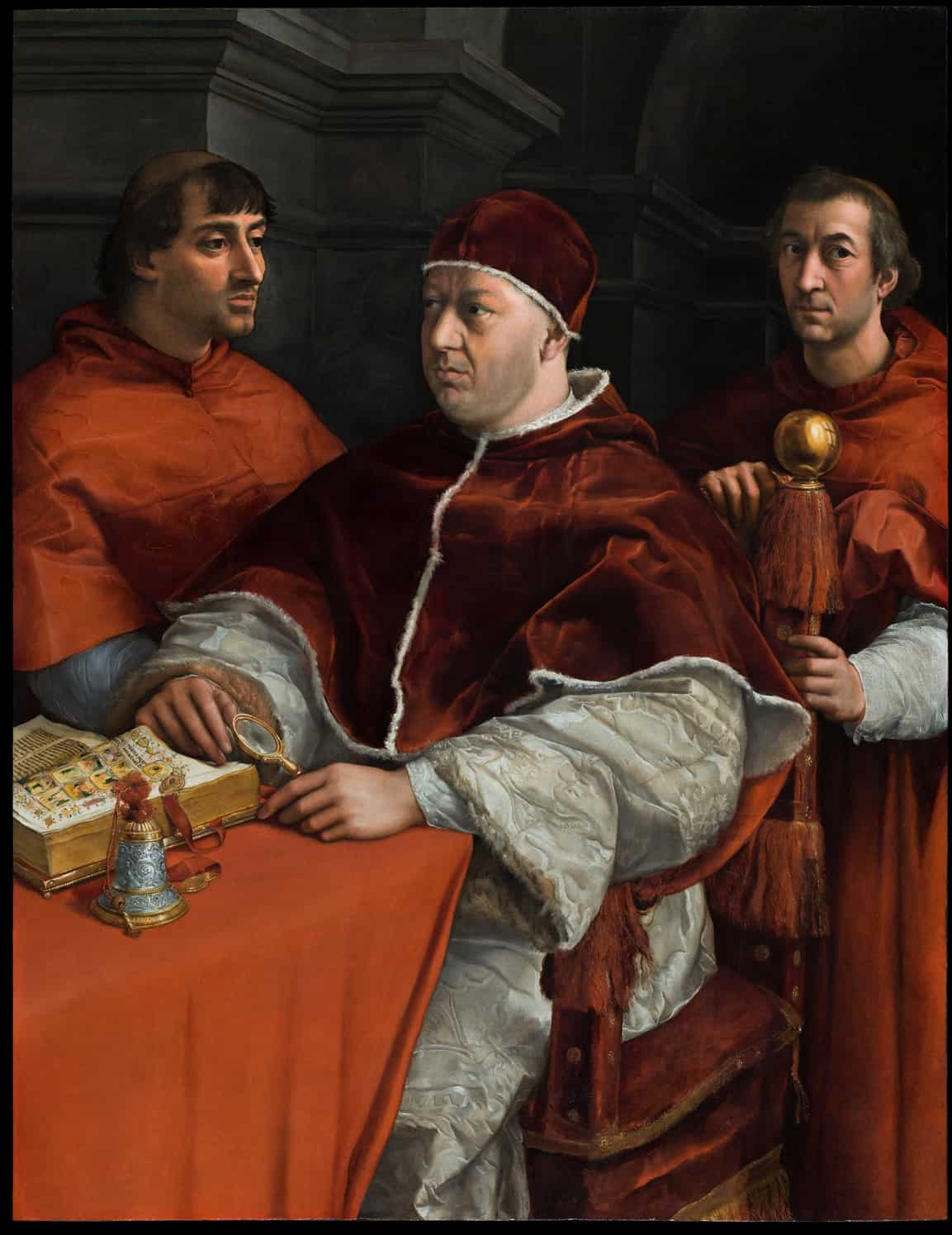
Pope Leo X, born Giovanni di Lorenzo de’ Medici, played a significant role in shaping the Renaissance art scene through his generous patronage of the arts. Loe was Pope from 1513 to 1521. He was also a member of the influential Medici family who were well-known for their support of the arts and intellectual pursuits. His papacy marked a period of flourishing artistic endeavors, and he commissioned several renowned artists to create masterpieces that defined the era.
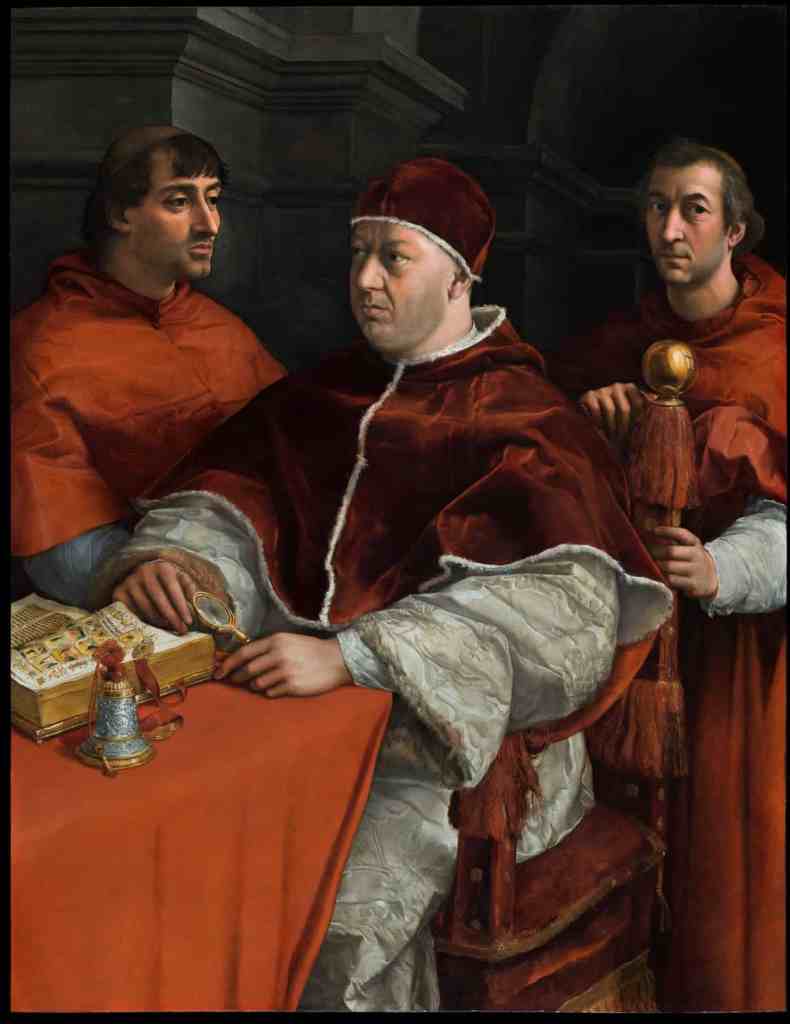
One of the most notable commissions during Pope Leo X’s reign was the decoration of the Vatican Palace. He engaged the services of renowned artists such as Raphael, whose frescoes in the Vatican’s Stanze di Raffaello, particularly in the Room of the Segnatura, showcased a harmonious blend of classical and Christian themes. Raphael’s work exemplified the Renaissance emphasis on balance, proportion, and idealized forms.
Additionally, Leo X commissioned works from other renowned artists of the time, including Michelangelo and Leonardo da Vinci. Michelangelo, under Leo’s patronage, created the magnificent Medici Chapel in Florence, which featured sculptures like the iconic statues of Lorenzo and Giuliano de’ Medici. Although Leonardo da Vinci’s association with the papacy was brief, he received Leo’s support for various projects, including studies on anatomy and engineering.
Pope Leo X’s patronage extended beyond traditional religious themes. He encouraged artists to explore secular subjects and mythological themes, reflecting the broader humanistic ideals of the Renaissance. This diversification of artistic themes contributed to the rich tapestry of Renaissance art and signaled a departure from the strict religious focus of previous centuries.
In conclusion, Pope Leo X’s commissions played a pivotal role in shaping Renaissance art, fostering the creation of masterpieces that reflected the period’s intellectual, cultural, and artistic vibrancy. His support for renowned artists not only enriched the Vatican’s artistic legacy but also left an indelible mark on the broader Renaissance movement.
 æsthetic triangle