Édouard Manet, a revolutionary figure in 19th-century art, crafted a distinctive style that defied conventional norms and set the stage for the emergence of Impressionism. While “Olympia” is one of his most famous works, exploring Manet’s style and technique beyond this iconic painting reveals a broader spectrum of his innovative approach.
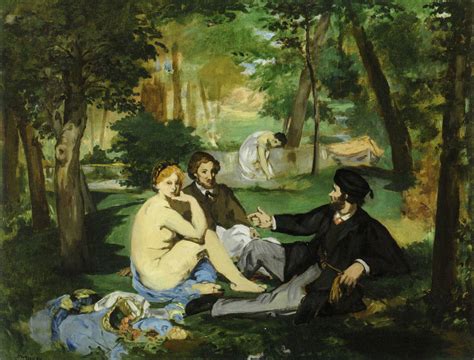
Manet’s style is characterized by its departure from academic traditions, emphasizing directness, and a keen observation of contemporary life. One of his notable paintings, “Le Déjeuner sur l’herbe” (Luncheon on the Grass), showcases these characteristics. Completed in 1863, the composition features a nude woman picnicking with two clothed men in a pastoral setting. Manet’s rejection of conventional academic norms is evident in the unapologetic presence of the nude figure, challenging the established standards of decency.
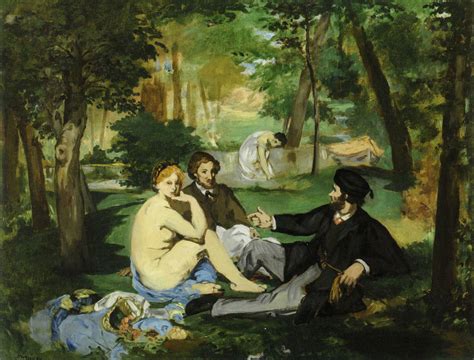
In terms of technique, Manet employed loose and visible brushstrokes, steering away from the meticulous detail favored by the academic painters of his time. His brushwork, exemplified in “Le Déjeuner sur l’herbe,” imparts a sense of spontaneity and immediacy to the scene. The figures and the landscape are rendered with bold strokes, capturing the play of light and shadow in a way that feels dynamic and alive.
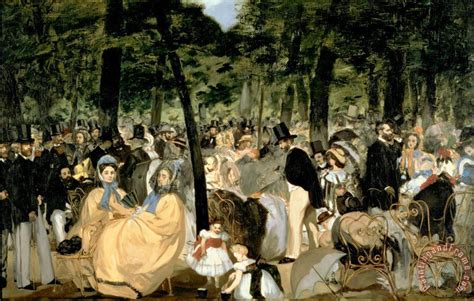
“Music in the Tuileries Gardens,” painted in 1862, is another work showcasing Manet’s distinct style and technique. The painting captures a scene of people socializing in the Tuileries Gardens in Paris. Manet’s composition includes a diverse array of characters engaged in various activities, reflecting the vibrancy of contemporary urban life. The brushwork in this painting is notable for its economy and precision, allowing the viewer to discern individual figures and their interactions amidst the lively atmosphere.
Manet’s ability to infuse everyday scenes with a modern sensibility is evident in “A Bar at the Folies-Bergère” (1882). This masterpiece presents a barmaid standing behind a counter, surrounded by bottles and mirrors. The composition is complex, with the reflection in the mirror creating spatial ambiguity. Manet’s technique involves a careful arrangement of brushstrokes to achieve the reflective surfaces and capture the effects of artificial lighting in the bustling atmosphere of the nightclub.
Throughout his career, Manet’s commitment to portraying contemporary life extended to his genre scenes and portraiture. His style and technique consistently challenged artistic conventions, pushing the boundaries of what was considered acceptable in the art world of his time.
Manet’s style and technique, when examined beyond the iconic “Olympia,” reveal a painter who fearlessly confronted the norms of his era. Through compositions like “Le Déjeuner sur l’herbe,” “Music in the Tuileries Gardens,” and “A Bar at the Folies-Bergère,” Manet’s innovative brushwork and unflinching portrayal of modern life left an indelible mark on the trajectory of art history. His departure from academic traditions and commitment to capturing the essence of his time laid the groundwork for the transformative Impressionist movement that would follow.
 æsthetic triangle